
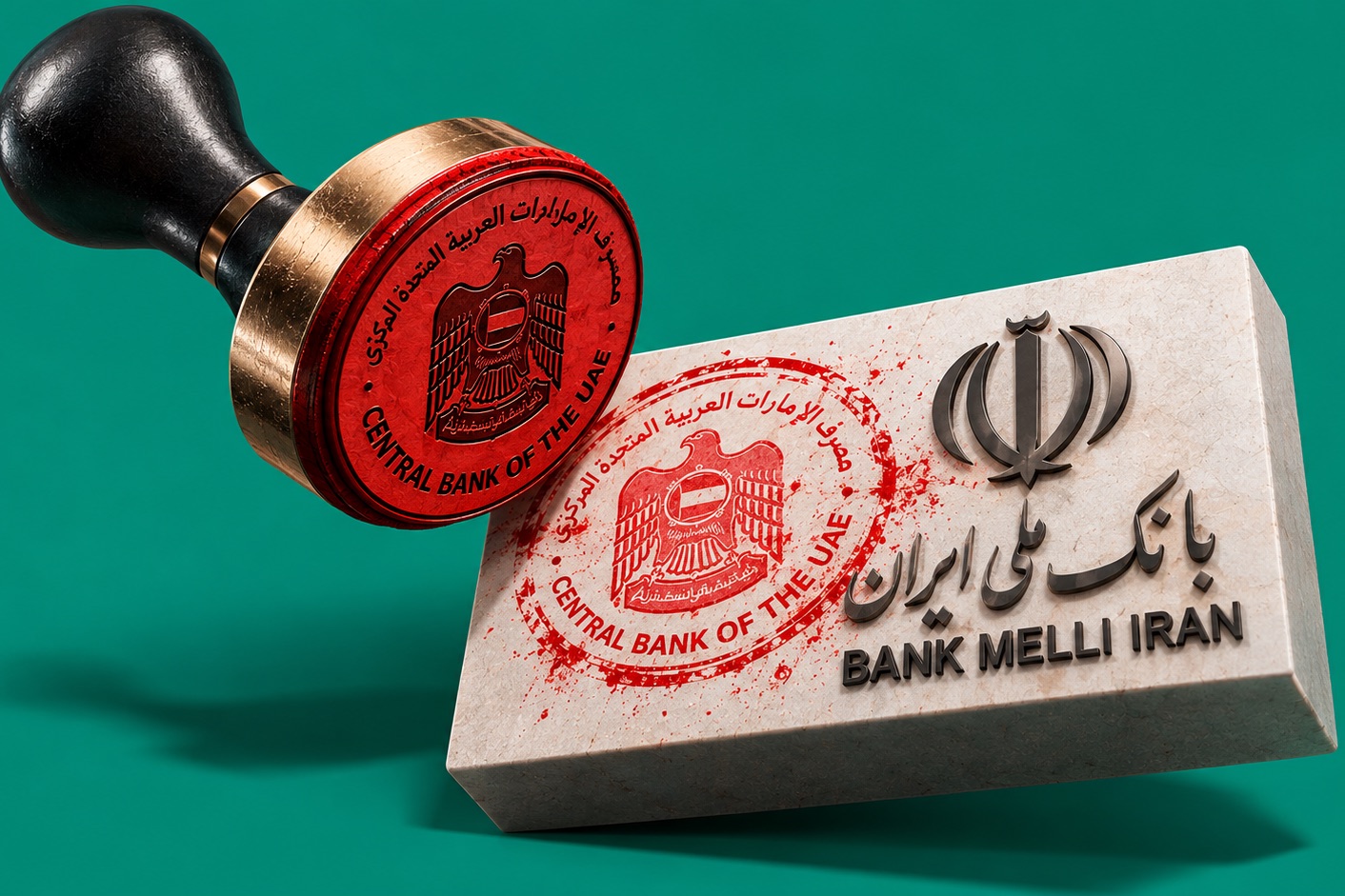
UAE central bank sanctions Bank Melli's local branches over laundering rules
The UAE central bank sanctioned Bank Melli's UAE branches for alleged anti-money-laundering violations.
Summary
- The UAE central bank sanctioned Bank Melli's UAE branches for alleged anti-money-laundering violations.
- The move landed as countries halted Iran flights under US aviation sanctions pressure.
- It signals Emirati regulators policing a trade relationship estimated near 30 billion dollars.
The latest
The UAE central bank said Wednesday it had imposed sanctions on the local branches of Iran's Bank Melli, accusing them of breaching federal laws built to counter money laundering and terrorism financing, according to the Financial Times. The decision is the Emirates' own regulatory action against an Iranian state lender, taken as Washington escalates financial and aviation pressure on Tehran.
Details
- The decision: The central bank said the penalties target Bank Melli's branches operating inside the UAE, on grounds they violated federal anti-money-laundering and counter-terrorism-financing legislation, the Financial Times reported. The central bank did not disclose the size of the penalties or whether the branches face restrictions on continuing operations.
- The bank: Bank Melli is one of Iran's largest state-owned lenders and has long maintained a presence in the Emirates, one of Tehran's most important commercial gateways. The announcement did not name any individuals or specify the transactions that triggered the regulator's findings.
- The trade stakes: Bilateral UAE-Iran trade is estimated at around 30 billion dollars, according to the Financial Times, making the Emirates one of Iran's principal economic outlets. Diplomats cited in the report expect Abu Dhabi will be reluctant to choke off that business entirely, even under pressure.
- Earlier step: The UAE had already suspended trade with Iran in August, according to diplomats cited by the Financial Times. Wednesday's central bank action moves that posture from commercial suspension into formal regulatory enforcement against a specific Iranian state institution operating on Emirati soil.
- The wider squeeze: A growing number of countries are suspending air links with Iran after Washington threatened to ground Iranian carriers worldwide. Oman and Azerbaijan barred Iranian airlines from operating to their territory as of Wednesday, while Iraq banned flights to Baghdad, the Financial Times reported.
- Washington's words: US Treasury Secretary Scott Bessent said this week that "all the Iranian airlines will be shut down around the world" starting Wednesday, according to the Financial Times. The US measures target services supplied to Iran's aviation sector rather than the airlines' home operations alone.
- Travel restrictions: Iranian travel agents say only holders of UAE residence permits or dual nationals can currently fly to the Emirates, the Financial Times reported. The limitation narrows one of the busiest passenger corridors between Iran and the Gulf while the financial measures tighten in parallel.
- War backdrop: The escalating sanctions campaign is unfolding during the war that began on February 28, according to the Financial Times, which describes a regional pattern of governments aligning with intensifying US financial and aviation pressure on Tehran.
Background
The Emirates has historically served as a re-export hub and banking conduit for Iranian commerce, a role that repeatedly placed Emirati regulators between Washington's sanctions architecture and a large, established trade relationship with Tehran.
Between the lines
The sequence matters: an August trade suspension followed by a formal central bank penalty suggests enforcement is now institutional rather than informal. Yet diplomats cited in the report expect Abu Dhabi to stop short of severing a 30 billion dollar relationship, pointing to calibrated compliance — visible action against a named state lender, without dismantling the wider commercial channel.
What's next
Watch whether the central bank discloses penalty amounts or orders the branches closed, whether other Gulf regulators follow with actions against Iranian banks, and whether Oman, Azerbaijan and Iraq extend their flight suspensions.
Source: Financial Times